Find Samples
To add to your samples basket, simply navigate to a product you're interested in, select the colour you like and press the + icon on an empty sample slot.
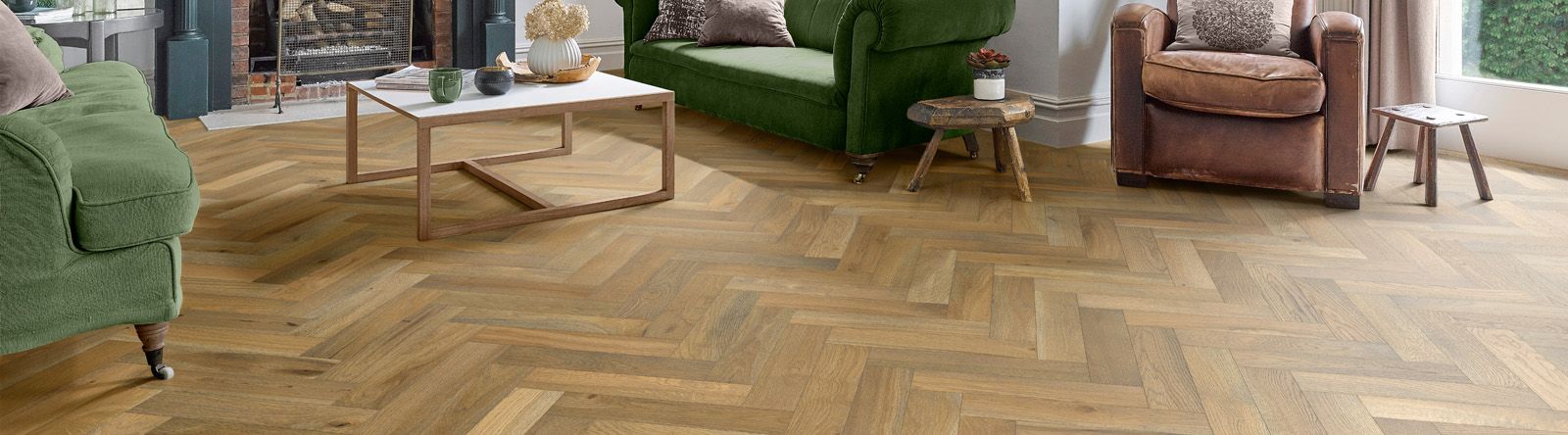
Natural and unique, there’s no denying that engineered wood is stunning, but choosing the right engineered wood flooring is about more than just what it looks like. We go over everything you need to weigh up in our engineered wood flooring buying guide, from the wood colour and grade to the plank style and finish. One of the factors to consider is what engineered wood flooring thickness you’re going for.
Engineered wood thickness is more than just a technical detail – it affects how well your flooring handles everyday life, whether it can be sanded in the future, and even how compatible it is with underfloor heating. Get it right, and you’ve got a floor that looks beautiful and performs brilliantly for years.
To help you decide, we’ll break down the different types of thickness options, the pros and cons of each, and what to consider when choosing the right thickness for you.
In this guide:
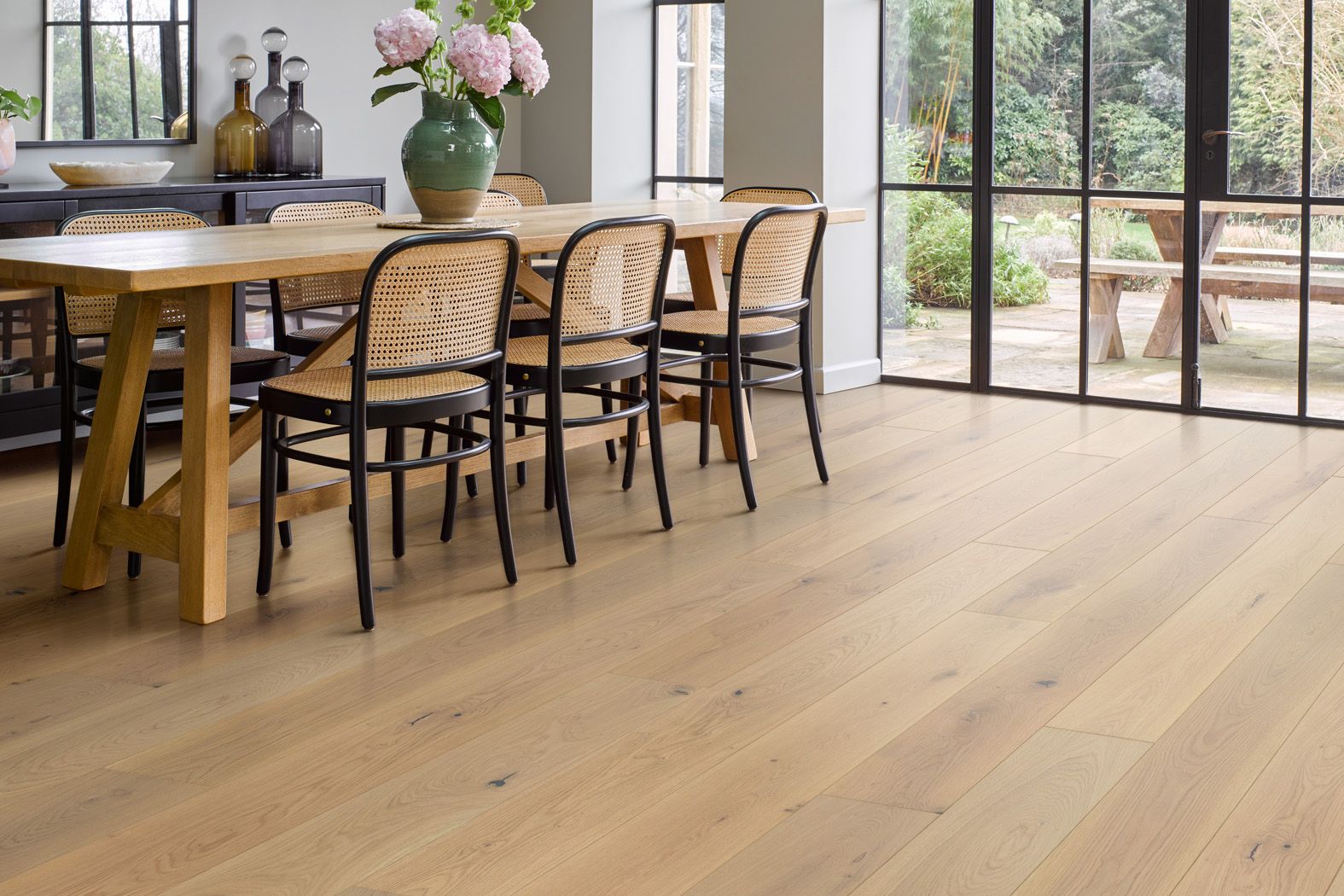
There are two types of engineered wood thicknesses we need to consider: the total plank thickness and the thickness of the top wear layer.
The breakdown of engineered wood plank construction is covered in much more detail in our engineered wood flooring guide. How thick the plank is will determine the durability, insulation, subfloor type, and ultimately, cost.
10mm thinner engineered wood planks are a practical choice as anything that’s around 12mm thick or under is less likely to need any door easing (but every home is different). 10-12mm engineered wood planks are also a good option to go over underfloor heating as the heat can transfer into the room much more easily than a thicker plank.
The most common thickness, 14mm thick engineered wood planks are a good middle-ground for stability, durability, and cost. They usually have a 3mm top layer, which allows your wooden floor to be refinished later down the line. 14mm planks can also be used with underfloor heating - the maximum recommended thickness is 15mm.
Thicker planks feel very luxurious – often reflected by their higher price point. 18mm engineered wood is good at insulating rooms, but it’s too thick to be used with underfloor heating. Thanks to their sturdy construction, weight bearing properties, and the fact they can be sanded down and refinished multiple times, 18mm thick planks are a wise choice for busy areas of your home. They usually come with the longest wear guarantee as well.
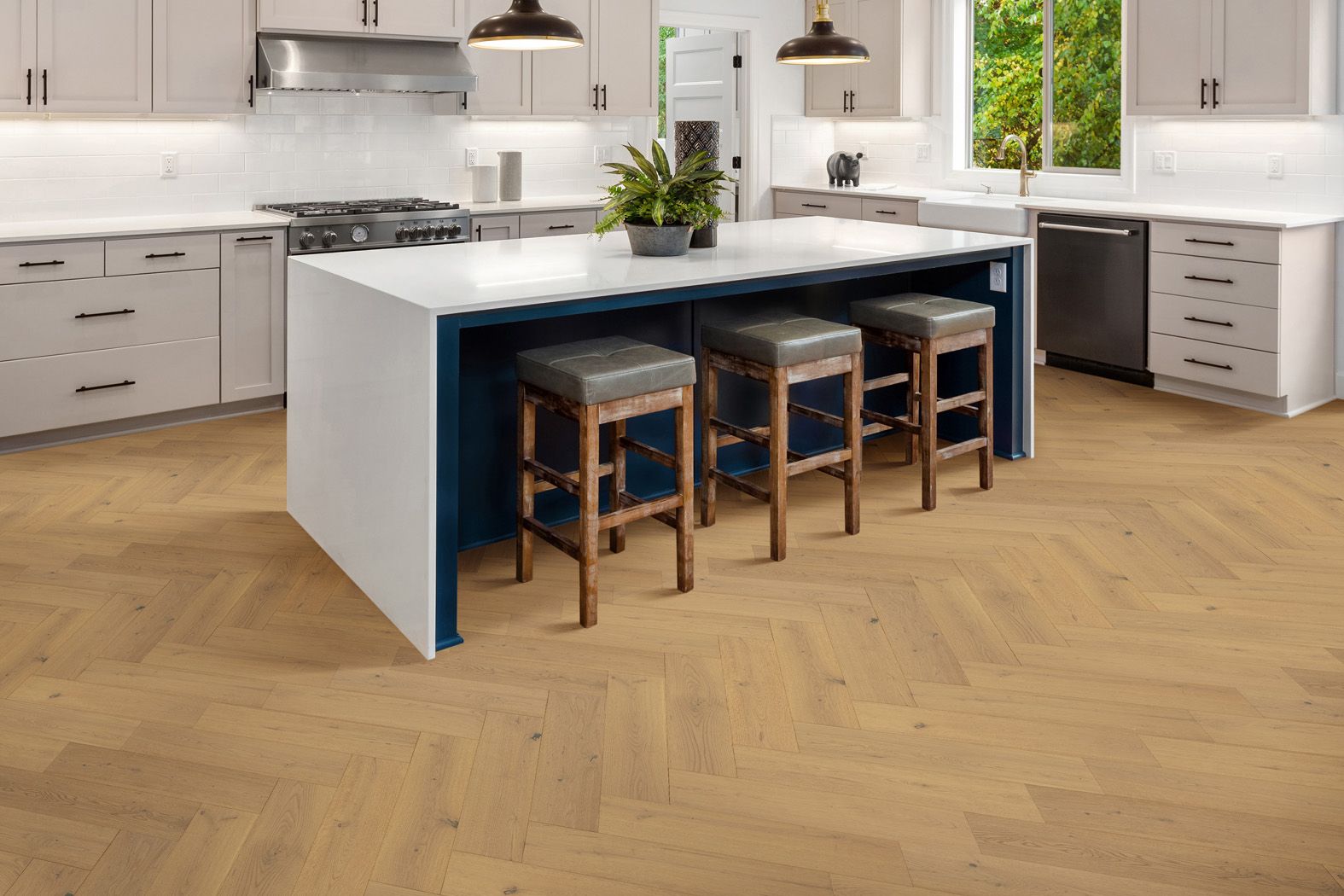
Most people want to know what’s the best thickness for engineered wood planks, but the question you should be asking is ‘what’s the best wear layer thickness for engineered wood flooring’. Top wear layers that are 3mm or above are often recommended, so a 14mm engineered wood plank with a 3mm top layer is the best thickness for engineered wood, as it ticks the boxes for durability, performance, and cost.
Every plank thickness has pros and cons to weigh up. Make sure you take a look at these factors below before choosing your engineered wood thickness.
Pros
Cons
Pros
Cons
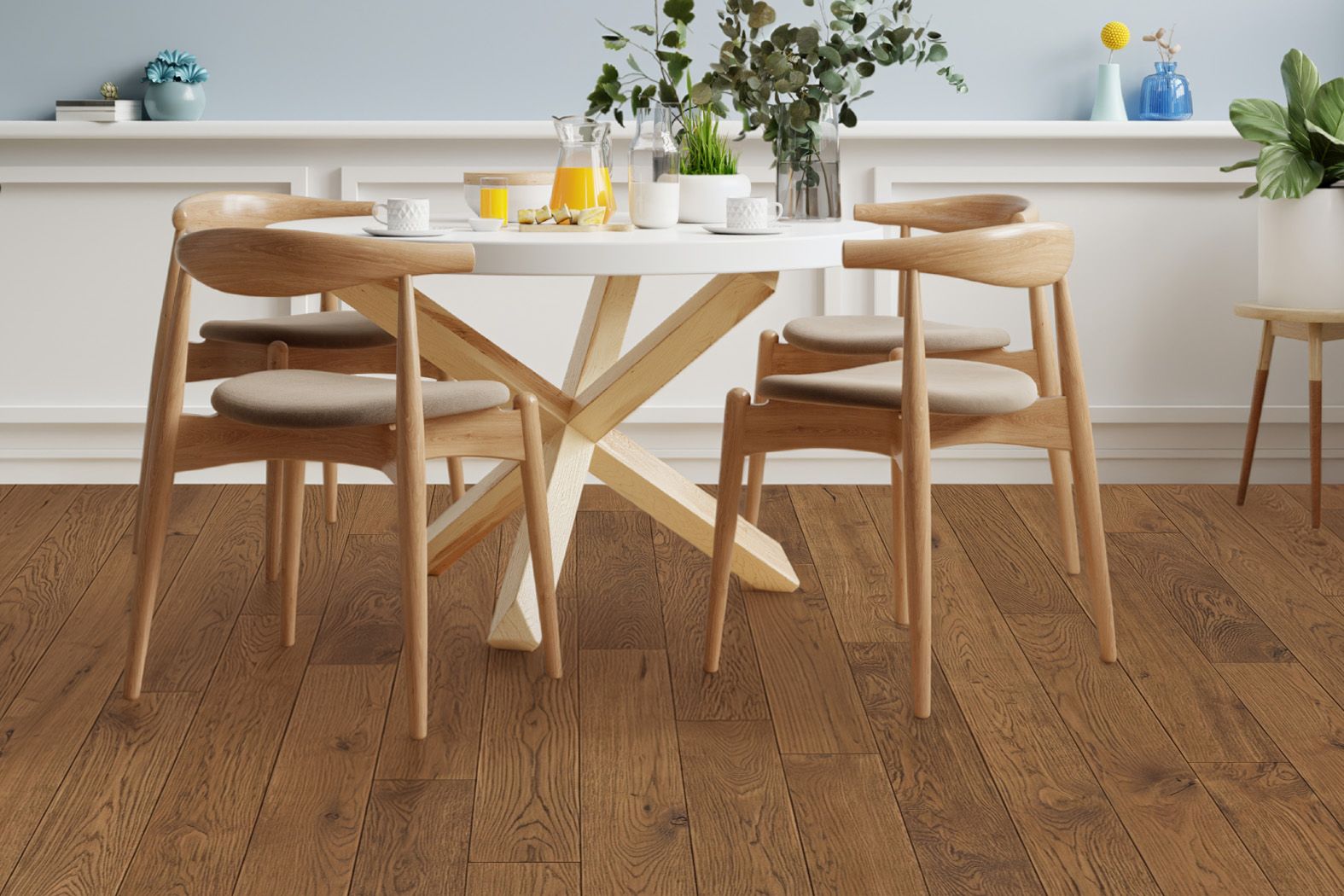
Now you might be thinking that you should go for the thickest one with the thickest wear layer, so it lasts the longest, but do you really need the highest spec flooring for your home? Consider these factors:
|
Engineered Wood Thickness |
10-12mm |
14-16mm |
18-20mm |
|---|---|---|---|
|
Top layer |
2-3mm |
3-4mm |
4-6mm |
|
Wear guarantee |
15 years |
15 years |
20 years |
|
Cost* |
£74.99 m2 |
£49.99 - £94.99 m2 |
£74.99 - £114.99 m2 |
|
Compatible with underfloor heating |
Yes |
Yes (up to 15mm) |
No |
|
Door easing required |
No |
Yes |
Yes |
|
Fitted on stairs |
Yes |
Yes |
Yes |
If you’re still unsure about which engineered wood thickness to choose, then a visit to your nearest Tapi store to explore our wood flooring might help. Our floorologists can show you different engineered wood thicknesses side by side, and chat to you about your budget and lifestyle to narrow down your options. Our engineered wood care guide tells you how to keep your wooden floor looking incredible, but if you want the wood-look on a budget, check out our laminate vs engineered wood comparison.
*Prices taken at time of publishing.

Published: 08-06-2026
 copy-250.jpg)
-250.jpg)
 - Article Image (not header)-250.jpg)

-250.jpg)









-250.jpg)
-250.jpg)
-250.jpg)
 (2)-250.jpg)
 (2)-250.jpg)
-250.jpg)
-250.jpg)
-250.jpg)
-250.jpg)

-250.jpg)
-250.jpg)

-250.jpg)
-250.jpg)
-250.jpg)
-250.jpg)
-250.jpg)
-250.jpg)

-250.jpg)



-250.jpg)
 (1)-250.jpg)
-250.jpg)

-250.jpg)

-250.jpg)
-250.jpg)

Hold tight! We're getting your results

Did you know...
You can book a FREE home visit?